
Last Updated: December 2025
Buyers don’t approach your company the same way they did even a year ago. They aren’t going to Google first. They’re going to AI tools like ChatGPT, Gemini, Copilot and they’re asking these tools the same questions they used to ask you. And long before they reach your website or sales team, they already believe they know who you are and whether they can trust you.
Digital trust is no longer a marketing idea it’s a core function of your entire revenue generation system. It shapes how prospects discover you, how they evaluate you, and how quickly they move once they enter a real sales conversation.
Many companies discover, once they audit their AI visibility, that their content simply isn’t structured in a way AI tools can use. At KLA Group, we see this frequently when teams believe they have plenty of content, but none of it is organized for AI search or digital trust.
Key Takeaways
- AI search influences the buyer’s first impression more than your website does.
- Consistent messaging across sales, marketing, and your CRM is now a trust requirement.
- Buyers decide whether to contact you long before they reach your sales team.
- Trust signals dramatically change how quickly prospects move through their buying process.
- Companies that control their digital trust show up in AI, create warmer conversations, and convert more opportunities.
Why Does Digital Trust Matter More in the AI Era?
Buyers want answers faster than ever. AI tools give them those answers immediately often without any website clicks.
This shift creates three immediate challenges for companies your size:
1. AI tools decide whether your prospect ever discovers you.
If AI can’t recognize your expertise, it can’t surface it.
2. Buyers form trust before a human conversation ever happens.
Your first impression is now shaped by AI search, peer discussions, and social visibility.
3. Prospects arrive far along in their decision.
They believe they understand the problem and the path forward even if they’re wrong.
If you suspect your messaging, content, or sales conversations aren’t lining up and may be quietly eroding trust you’ll want to watch the on demand Coffee with Kendra webinar on digital trust in the AI era.
What’s Really Breaking Digital Trust?
Most CEOs describe the symptoms the same way:
- Marketing is busy, but we aren’t seeing opportunities.
- Sales is active, but deals aren’t moving.
- Our CRM has data, but none of it feels reliable.
- AI tools are describing us incorrectly or not at all.
“Users are 2.7X more likely to trust AI-generated answers when the AI references verifiable, consistent digital sources.” (AI Index Report 2025, Stanford University)
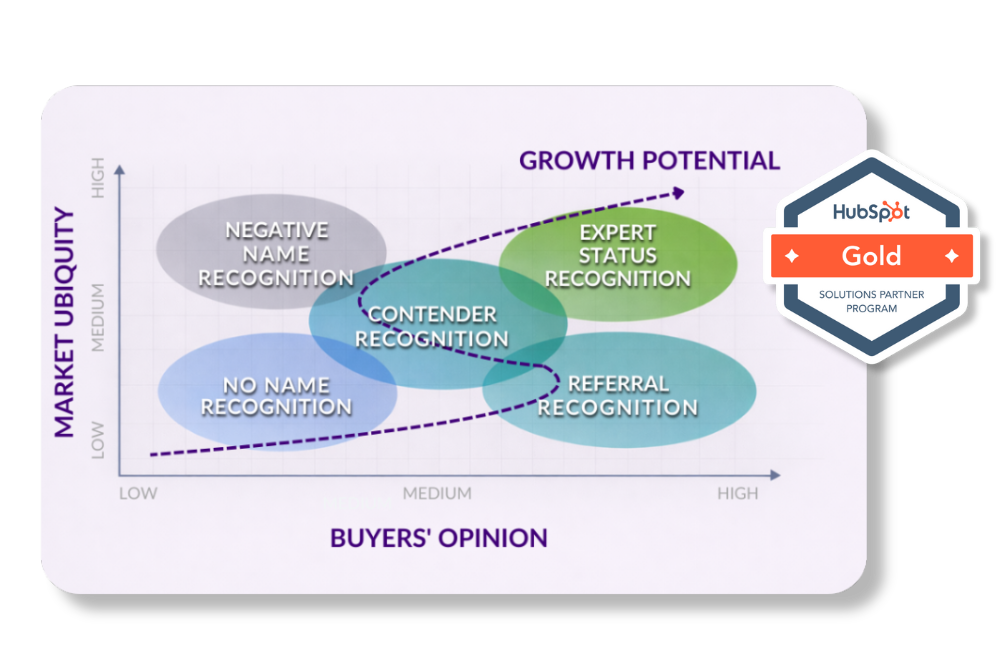
Trust breaks when the story your prospect sees in one place doesn’t match what they see somewhere else. Inconsistency feels risky and risk stalls decisions.
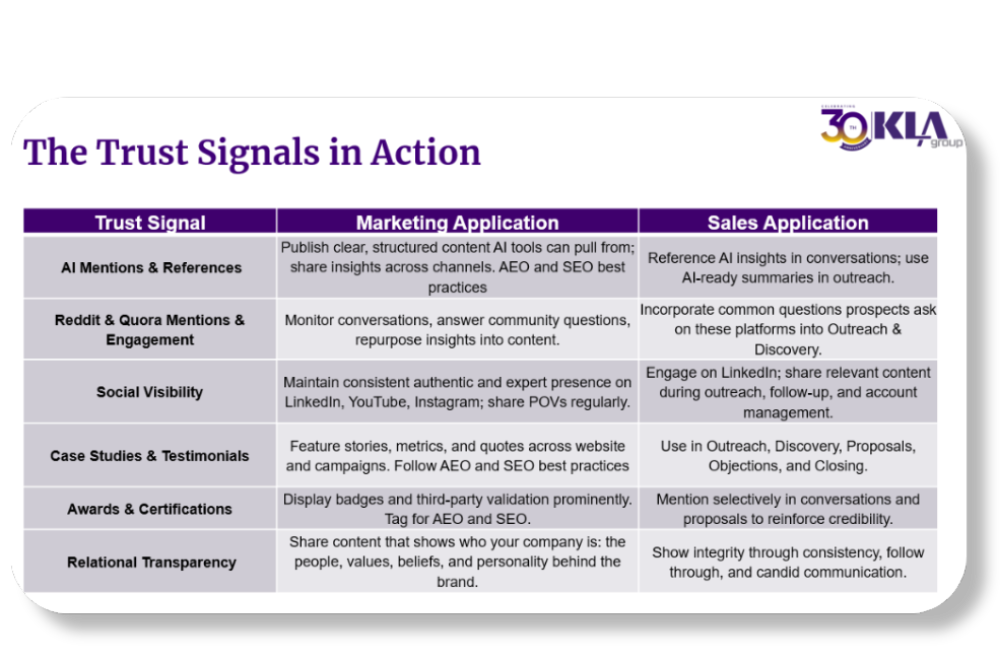
1. Are AI tools able to describe your expertise clearly?
AI search results are becoming your new first impression.
If AI tools can’t summarize who you help, what you do, or how you solve problems, prospects won’t find you and they’ll assume you aren’t a real contender.
How CEOs should look at this:
Go to ChatGPT or Gemini and ask, “Who helps companies improve sales and marketing productivity?”
If your company isn’t mentioned or described accurately, this trust signal is weak.
What needs to change:
Structured content. Clear answers. Defined language.
Make it easy for AI to read, understand, and reuse your expertise.
2. Are people talking about you in the communities your buyers trust?
Today’s buyers don’t wait for your sales team to educate them.
They go to peer groups, Reddit, Quora and industry communities to get “real” answers.
If your company never shows up in those conversations, buyers notice.
Why this matters:
Buyers trust peers more than they trust brands and AI tools often scrape these discussions to form opinions.
What needs to change:
Show up where your buyers already ask questions.
Not to promote yourself, but to help.
3. Does your social presence match how you want to be seen?
LinkedIn is no longer just a posting platform it’s a credibility signal.
AI tools scan it. Prospects scan it. Your salesperson’s prospects scan it.
What CEOs need to ask:
If someone only saw your leadership team’s LinkedIn activity, would they understand your expertise?
Or would they see silence?
What needs to change:
Leadership visibility.
Consistent insights.
Authentic, practical content that reinforces your point of view.
4. Are your case studies and proof points easy to find and easy to believe?
Buyers want confidence, not claims.
They check for evidence long before they request a meeting.
What breaks trust:
- Vague results
- Old case studies
- No examples relevant to their industry
- Stories that contradict what AI says about you
What needs to change:
Make proof part of the early experience not something sales delivers only at the end.
5. Do third-party awards or certifications back up your authority?
External validation matters.
It signals that someone else has vetted your expertise.
Why this is powerful:
AI models favor outside confirmation.
Buyers do too.
What needs to change:
Show these recognitions clearly across your website, social profiles, and HubSpot email templates.
6. Does your leadership, sales team, and marketing team tell the same story?
Inconsistency is the fastest way to lose trust.
Buyers don’t articulate it they just pull back.
Common breakdowns:
- Website says one thing
- AI tools say another
- Sales reinforces a third story
- Leadership speaks differently than the brand messaging
What needs to change:
One message.
Shared by everyone.
Everywhere a buyer interacts with you.
7. Do all your digital channels feel like they come from the same company?
This is the trust signal that influences everything else. This is where most companies feel breakdown. Inconsistency across channels isn’t a content problem it’s a signal that your revenue engine is operating in disconnected parts. Buyers can feel that instantly, and AI tools surface it even faster.
When prospects see the same message in AI search, on your website, in sales emails, in LinkedIn posts, and inside conversations, they feel confident choosing you.
Why this matters:
Buyers don’t say, “I don’t trust them.”
Instead, they say, “It doesn’t feel like the right fit.”
What needs to change:
Align your sales, marketing, CRM, HubSpot sequences, social channels, and AI-visible content so the story never changes.
“Inconsistencies in digital information reduce the accuracy of AI outputs by 30–40%, even when the AI model itself is well trained.”
When KLA Group first reviewed a 100 year old manufacturer’s digital presence, prospects couldn’t find clear, consistent information about the company anywhere not in search, not in social content, not in email, and not in the messaging sales used.
Once their messaging, content, social visibility, and sales outreach were unified, everything changed. Their marketing output increased 300%, sales conversations started 2–3X further down the funnel, and prospects arrived already confident in who they were and how they could help.
That shift didn’t happen because of a tactic. It happened because their story finally matched across every channel.
How Do These Trust Signals Change the Buyer’s Journey?
AI reshapes the buyer’s journey, but trust is what moves buyers through it.
- Awareness now happens in AI search.
- Interest grows in communities and social channels.
- Desire builds through proof and consistency.
- Action happens when buyers feel confident enough to contact sales.
When your story is consistent across every part of your revenue engine marketing, AI search, sales outreach, and CRM follow-up buyers experience clarity. And clarity is what accelerates movement and creates measurable opportunities.
What Should CEOs Do First to Strengthen Digital Trust?
Start smaller than you expect:
1. See what AI already says about you.
It reveals real messaging gaps.
2. Look for inconsistencies between teams.
Wherever your story changes, trust breaks.
3. Fix the story before you fix the activity.
A consistent message accelerates everything sales, marketing, and AI visibility. If your team is doing all the right activities but opportunities are still stalling, it’s time to look deeper at where your digital presence is breaking trust long before prospects reach sales.
If you want to see how digital trust forms and where it quietly breaks down watch the full Coffee with Kendra webinar recording.
At KLA Group, we help CEOs strengthen the digital trust signals that power their entire revenue generation system, so their teams stop chasing activity and start generating real opportunities. If you need help, we can strengthen your trust signals and turn more early-stage interest into measurable results. Schedule a 20-minute consultation.

Frequently Asked Questions (FAQ)
Q: What does “digital trust” really mean for my business today?
A: Digital trust is the confidence buyers build before they ever talk with sales. It comes from what they see in AI tools, digital communities, and your marketing content. When all of these places tell the same story, buyers feel confident engaging with your company.
Q: Why are buyers relying so heavily on AI search now?
A: Buyers use AI search because it gives them fast, direct answers about which companies understand their problems. If AI can’t explain who you are or why you’re credible, prospects move on. This shift affects the entire revenue generation system because trust now forms long before sales is involved.
Q: Where does digital trust typically break down?
A: Trust breaks when your story changes across channels. If AI tools describe you one way, your website says something different, and your sales team uses another message entirely, prospects sense the inconsistency and pull back. In our work at KLA Group, this is one of the most common issues we diagnose.
Q: How does improving digital trust create more opportunities?
A: When prospects repeatedly see clear, accurate information about you across AI search, social content, and sales communication, they come into conversations more prepared and more confident. That trust accelerates their movement through your revenue engine and increases the likelihood they will take action.
Q: What should CEOs do first to strengthen digital trust?
A: Start by comparing what AI tools say about your company with what appears on your website, in social content, and in sales conversations. Where the story changes, trust breaks. Fixing those gaps is the fastest way to improve how your entire revenue generation system performs.
Q: What are trust signals, and how do they impact my company’s AI visibility?
A: Trust signals are consistent, verifiable digital cues that help AI tools understand and confidently represent your company. These include your website content, case studies, leadership LinkedIn activity, and third-party mentions. When these signals are strong and aligned across channels, your company is more likely to appear in AI-generated answers increasing early-stage visibility and generating better opportunities.
Q: How can I tell if my company has a digital trust problem?
A: If AI tools like ChatGPT or Gemini can’t describe what your company does or if your messaging sounds different across your website, LinkedIn, and sales emails you likely have a trust gap. Inconsistent messaging breaks trust before buyers ever speak to your team. Start by asking AI tools how they describe your company and comparing those answers to what appears on your website and in sales materials.
Q: What’s the fastest way to improve trust and get better results from AI search?
A: Focus on message consistency across your website, social profiles, and CRM email templates. This creates a unified story AI tools can understand and reuse. Structured content, updated proof points, and visible leadership insights strengthen your credibility and improve your chances of being surfaced by AI during buyer research.
About Kendra Lee
Revenue generator and founder of KLA Group, Kendra Lee helps small and mid-sized companies grow revenue by getting seen, getting heard, and getting traction with sales, marketing, and AI strategies that cut through the noise. She’s the author of The Sales Magnet with her third book, From Chaos To Revenue, coming January-February 2026.
Read More Related Articles